

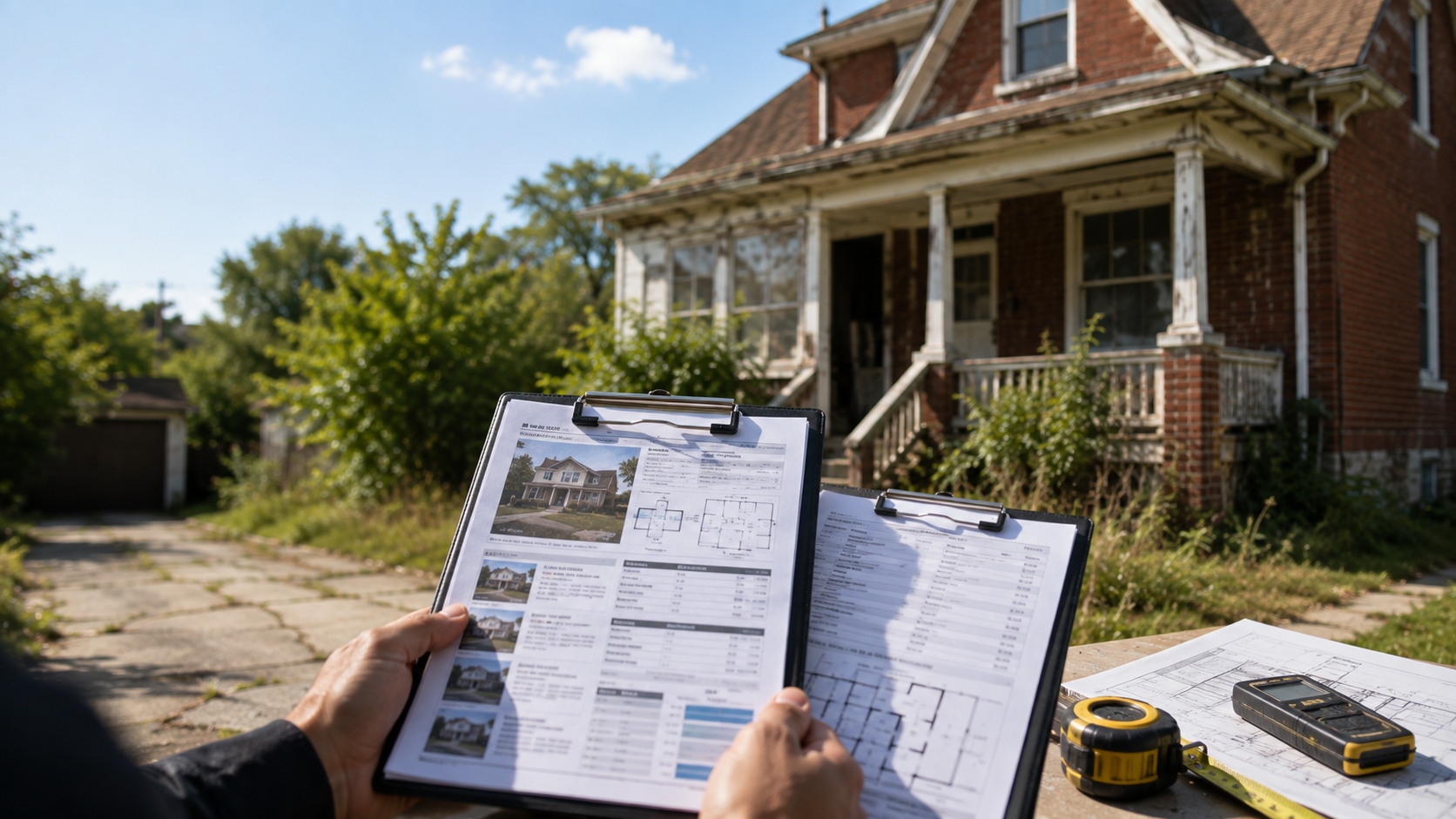
How to Read an ARV Like a Pro
Ask ten different wholesalers how they calculated the ARV on a property, and you'll get ten different answers — some of them honest, some of them optimistic, and some of them frankly made up. After-repair value is the single most important number in any investment deal, and it's also the number most often inflated to make a listing look better than it is.
If you're serious about investing in the GTA, learning to read an ARV critically isn't optional. Here's how to do it — and what we do differently when we calculate it for the deals in our network.
What ARV Actually Means
After-repair value is an estimate of what a property will be worth once renovations are complete — not what it's worth today, and not what someone hopes it'll be worth in a hot market six months from now. It's a grounded, evidence-based projection built from real data, not a wish.
The problem is that "evidence-based" is doing a lot of work in that sentence, and a lot of sellers skip the evidence part entirely.
The Three Inputs That Actually Matter
A trustworthy ARV is built from three things. If any one of them is missing, treat the number with suspicion.
1. Comparable sales — recent, nearby, and similar. This means properties that sold in the last 3-6 months, within a reasonable radius, with a similar size, layout, and condition after renovation. A comp from 18 months ago, or from a neighbourhood two postal codes over, tells you almost nothing about today's market in this specific pocket of the GTA. Ask for the actual comps — addresses, sale dates, sale prices — not just a number someone landed on.
2. Renovation scope — specific, not vague. "Fully renovated" means nothing on its own. A defensible ARV assumes a specific scope of work: new kitchen, new bathrooms, flooring throughout, updated electrical, and so on. If the scope of work assumed to hit that ARV isn't spelled out, the number is guesswork dressed up as analysis.
3. Finish level — matched to the neighbourhood. A $650K ARV assuming builder-grade finishes is a very different number than a $650K ARV assuming high-end finishes. The finish level has to match what actually sells in that specific market — not what would look good in a different, more upscale area of the city.
Red Flags That Signal an Inflated ARV
- Comps that are technically nearby but functionally different. A detached home comped against townhouses, or a property comped against homes with legal basement apartments when this one doesn't have one — these inflate the number without lying outright.
- No repair estimate attached. If a deal shows you the "after" number with no breakdown of what it costs to get there, you have half the picture. ARV without a matching repair estimate isn't useful — it's marketing.
- Round numbers with no math shown. A precise ARV built from real comps rarely lands on a perfectly round number. If every deal from a source comes in suspiciously close to a clean $50K increment, ask more questions.
- Reluctance to share the comps. A legitimate source will hand over the addresses and sale data without hesitation. Hesitation is the tell.
How to Verify an ARV Yourself
You don't need to be an appraiser to sanity-check a number:
- Pull up recent sold listings in the same neighbourhood using any public real estate portal.
- Compare square footage, bed/bath count, and lot size to the subject property.
- Look at the condition of the comps in their listing photos — are they renovated to a similar standard as what's being proposed?
- Adjust for anything materially different — a comp with a legal basement suite, a bigger lot, or a busier street should be adjusted, not treated as equivalent.
If the ARV you're being handed survives that ten-minute check, you're likely dealing with a legitimate number.
How We Handle ARV Differently
Every property in our network comes with a fully documented ARV — built from verified comparable sales, a specific and itemized renovation scope, and a finish level grounded in what actually moves in that neighbourhood. We don't hand you a number and ask you to trust it. We show you the comps, the assumptions, and the math behind it, so you can evaluate the deal the same way we did.
This is part of what "vetted" means in every deal we bring to our investor network — not a promise, but a process you can actually check.
Want Deals With ARVs You Can Actually Verify?
Join our investor list to get access to opportunities where the numbers are shown, not just claimed — verified ARV, itemized repair costs, and real comparable sales on every deal.